Charfen.co.uk Review: What the Site Publishes, Who It’s For, and Whether You Can Trust It


If you searched for charfen.co.uk, you were probably trying to answer one of two questions: what exactly is this website, and is the information on it worth trusting? Those are reasonable questions because the site doesn’t fit neatly into one category. It presents business advice, technology content, health pieces, travel articles, lifestyle guides, finance topics, and other general-interest material under the same domain.
After looking through its homepage, category pages, About information, contact pages, recent articles, and outside reputation checks, my view is fairly straightforward. This is a functioning general-interest publishing site rather than an established specialist publication. There’s useful material to browse, but readers should judge important claims article by article instead of assuming the domain itself guarantees expertise.
What kind of website is this, exactly?
The easiest way to understand the site is to ignore the branding for a moment and look at what it actually publishes.
Its homepage currently mixes subjects such as entrepreneurship, newborn products, finance, AI, construction, travel accommodation, medical procedures, house cleaning, social media tools, and online gaming. Separate category pages cover areas including business, technology, health, fashion, food, home improvement, travel, and finance.
That makes it a general publishing platform rather than something comparable to Bloomberg for finance, TechCrunch for technology, or a dedicated medical information resource.
The distinction matters. A broad blog can still contain useful articles. In fact, sometimes a well-written general guide is exactly what you need. The problem starts when people assume a publication covering 10 or 15 different industries must possess specialist authority in all of them.
That isn’t a reasonable standard for any general-content site.
The About page puts a heavier emphasis on entrepreneurship. It says the platform aims to provide business owners with strategies, tools, and insights and describes its approach as being based on expert-led and actionable advice. Yet the live publishing mix extends far beyond entrepreneurship.
That difference between stated positioning and actual content is probably the single most useful thing to understand about the site.
Why does the name cause confusion?
There is an important distinction that some searchers may miss.
Alex Charfen is a US entrepreneur associated with entrepreneurial coaching, business growth systems, the Entrepreneurial Personality Type framework, and other programs. His established website is Charfen.com, not the UK domain discussed here. His official site identifies him directly, discusses his programs, and includes his biography, podcast material, client testimonials, and business resources.
I found no clear statement on the UK site’s visible About or contact pages establishing that it is Alex Charfen’s official UK website.
That doesn’t imply anything improper about the domain. Similar names appear online all the time. It simply means a reader looking specifically for Alex Charfen’s coaching programs should verify the domain before assuming two similarly named websites belong to the same organization.
This is one of those situations where five seconds spent checking the URL can prevent a lot of confusion.
How useful is the actual content?
The quality varies because the subject matter varies so widely.
Some articles are reasonably focused. One piece about leather grades, for example, discusses full-grain, top-grain, genuine, bonded, and synthetic leather and connects those differences specifically to corset construction and durability. That is much more useful than a generic 400-word definition of leather types.
Other areas are more commercially oriented. The site also publishes content about products, software, professional services, business tools, health-related subjects, and various consumer decisions.
This means I wouldn’t use a single rule for everything published there.
If you’re reading a guide about organizing a house, choosing a gift, understanding a piece of software, or learning basic business terminology, the stakes are relatively low. You can read the article, compare its advice with your situation, and move on.
If you’re reading about investing $25,000, interpreting tax obligations, choosing medical treatment, or making a legal decision, that’s different. Those subjects deserve primary sources, named experts, current regulations, and sometimes professional advice.
Most website reviews get this wrong by trying to decide whether every sentence on an entire domain is either “trustworthy” or “untrustworthy.” Real information quality doesn’t work that way.
Who is writing the articles?
This is an area where the site could improve.
The homepage shows articles attributed to names as well as posts attributed simply to “Admin.” One recent homepage entry, for example, lists Sajjad Hassan with Grow SEO Agency, while other pieces use the generic Admin byline.
For ordinary informational content, an Admin byline isn’t automatically a problem. Plenty of smaller publications use shared editorial accounts.
But author identity becomes much more important when an article covers health, finance, law, cybersecurity, taxation, or other areas where expertise materially changes the reliability of the advice.
A strong publication should make it easy to answer three questions: Who wrote this? What qualifies them to discuss it? What sources support the important claims?
If those answers aren’t obvious, I would independently verify anything consequential.
The contact pages reveal an unusual inconsistency
One of the more interesting details appears in the site’s contact information.
A Contact page includes an “About Me” section describing someone named Alex Thompson as a passionate cook behind a recipe blog. The same page later describes the website as a platform covering UK news, politics, lifestyle, and culture.
There is also a separate Contact Us page presenting the site more broadly and inviting questions, collaborations, advertising inquiries, and guest-post partnerships.
Those descriptions don’t align particularly well.
To me, this looks more like leftover or inconsistently updated website copy than evidence of anything sinister. WordPress sites frequently retain template text after redesigns or changes in editorial direction. Still, it weakens the professional presentation.
Cleaning up those pages would make the publication easier to understand and give readers more confidence about who actually operates it.
Is the website technically safe to visit?
Available technical checks do not show an obvious reason to treat ordinary browsing as inherently dangerous.
The domain uses HTTPS, and third-party reputation services have reported a valid SSL certificate. Public domain data cited by multiple checking services places the domain’s registration on January 23, 2025, making it relatively young compared with long-established publishers.
External reputation tools don’t completely agree with one another. ScamAdviser has described the site as likely safe while noting its young age and relatively low traffic ranking. Gridinsoft previously gave it a 69/100 assessment with a “trusted but verify” style of verdict. Scam Detector has published a substantially more cautious score.
This disagreement is actually useful.
Automated trust scores aren’t laboratory tests. They combine factors such as domain age, hosting, SSL configuration, traffic signals, blacklist records, ownership visibility, and detected behavior using proprietary formulas. Two services can look at the same website and reach very different numerical scores.
I would therefore use these tools as warning systems, not as absolute verdicts.
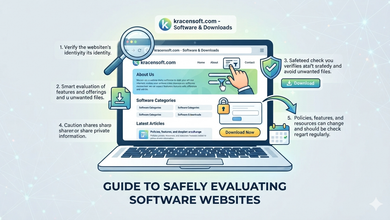
What should you check before trusting an article?
For casual browsing, you don’t need to perform a forensic investigation every time you open a blog post. For anything important, though, I use a simple check.
Look for:
- a clearly identified author;
- links to primary or reputable sources;
- a recent publication or update date;
- specific evidence behind numerical claims;
- disclosure when a recommendation appears commercial.
Suppose an article claims a financial strategy can increase returns by 20%. I would want to know where that 20% came from. If another article says a certain medical treatment is appropriate for a particular patient group, I’d check the Mayo Clinic, Cleveland Clinic, FDA, NIH, or a relevant medical society rather than relying on a general blog alone.
That’s not criticism specific to this site. It’s simply good internet hygiene in 2026.
Does guest-post content make a site unreliable?
Not automatically.
The site openly references guest-post or collaboration opportunities in its contact-related content, which suggests outside contributions may form part of its publishing model.
Guest contributions can be excellent. Major publications use outside contributors too.
The real issue is editorial control. A useful contributed article should still be reviewed for factual accuracy, relevance, misleading claims, inappropriate links, and obvious promotional bias.
A reader usually can’t see what happened behind the scenes, so the published article itself has to earn trust through specificity and sourcing.
What the site does better than many small general blogs
There are some positives worth recognizing.
The website is active. Its homepage showed fresh material in August 2026, rather than looking like an abandoned domain containing five articles from years ago.
It also maintains multiple topic categories and publishes longer explanatory pieces instead of functioning purely as a collection of thin landing pages. The breadth can be convenient for casual readers who enjoy jumping between technology, business, food, travel, and lifestyle subjects.
The downside is the same breadth.
Publishing about everything makes establishing subject-matter authority harder. If the site wants to become a genuinely recognizable media brand rather than simply a broad content platform, stronger author bios, clearer editorial policies, better sourcing, and more consistent About and Contact information would make a noticeable difference.
FAQs
Is Charfen.co.uk legit or a scam?
There is no clear evidence from the sources I checked that it is a confirmed scam operation. The domain is active, uses HTTPS, publishes accessible content, and has received mixed rather than uniformly negative ratings from automated reputation services.
That doesn’t mean every article or commercial offer should be accepted without verification.
Is this Alex Charfen’s official website?
The official website I found for American entrepreneur Alex Charfen is Charfen.com. His site directly identifies him and presents his coaching, entrepreneurial frameworks, podcast, resources, and biography.
The UK publication should therefore not be assumed to represent him unless a clear official connection is independently demonstrated.
What topics does the website cover?
It covers a very broad mix including business, technology, finance, lifestyle, health, fashion, food, home improvement, travel, and general blog content.
Think of it as a multi-topic publication rather than a specialist business site.
Can I trust its health or finance articles?
Use them as starting points, not as your only source for high-stakes decisions. Check important medical claims against recognized health authorities and financial claims against qualified professionals, regulators, official documentation, or reputable specialist publications.
The broader and less specialized a publisher is, the more useful independent verification becomes.
Why are there so many different reviews of this site online?
The domain is relatively young and appears to have attracted attention from website-review and reputation-checking sites. Different services also use different scoring formulas, which explains why one can produce a favorable assessment while another produces a cautious one.
Focus on the evidence behind a score rather than the number itself.
The site is best viewed as an active, broad publishing platform that is still building its identity and authority. I wouldn’t hesitate to read a useful article there, but I also wouldn’t treat the domain name alone as proof that every writer is an expert. For everyday information, browse normally. For money, health, legal issues, or major purchasing decisions, verify the underlying claims elsewhere before acting.