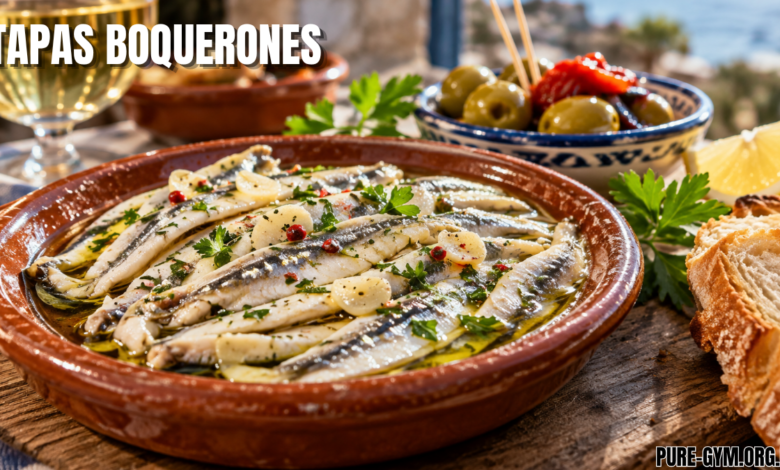
Searching for the best tapas boquerones near me usually means one thing: you want those tender, bright-white Spanish anchovy fillets dressed with vinegar, olive oil, garlic, and parsley—not the intensely salty brown anchovies that arrive on pizza.
The difference is substantial.
In Spain, boquerones are fresh anchovies, and boquerones en vinagre is one of their classic preparations. The cleaned fillets are marinated in vinegar and commonly finished with olive oil, garlic, and parsley. Spain’s official tourism site specifically lists boquerones in vinegar among traditional Spanish fish preparations and identifies them as a familiar tapa in places such as Valencia.
For Americans trying this dish for the first time, finding a good version can turn a simple tapas dinner into something memorable.
Know the Dish
Boquerones are anchovies, but calling them simply “anchovies” doesn’t really explain what’s arriving at the table.
Most Americans know anchovies as dark, salty preserved fillets. Spanish boquerones en vinagre are different. They are usually pale or almost white, softer in flavor, pleasantly acidic, and far less aggressively salty.
Good ones taste fresh.
You should notice vinegar first, followed by clean seafood flavor, good olive oil, garlic, and fresh herbs. The acid gives the fish its distinctive brightness without making every bite taste like straight vinegar.
A traditional plate is often surprisingly simple: several anchovy fillets arranged side by side, a drizzle of oil, chopped parsley, sliced or minced garlic, and perhaps olives or bread nearby.
That’s enough.
A restaurant doesn’t need to pile twelve ingredients onto the plate to make boquerones interesting.
Boquerones vs. Anchoas
This distinction can save you from ordering the wrong dish.
On Spanish menus, boquerones generally refers to fresh anchovies, particularly when they’re vinegar-marinated. Anchoas commonly refers to salt-cured anchovies, which develop the darker color and concentrated flavor most American diners associate with preserved anchovies.
You might even encounter both together.
Spanish cooking has a tapa sometimes called a matrimonio, or “marriage,” that combines the two styles of anchovy. Spain’s tourism authority describes this pairing as cured anchovy with marinated boquerón.
If you dislike the strong saltiness of canned anchovies, don’t automatically skip boquerones. They can taste dramatically milder.
Finding Good Ones
Start your search with Spanish restaurants, tapas bars, Basque restaurants, and restaurants specializing in Iberian food.
Search terms matter. Try phrases such as:
- boquerones en vinagre near me
- Spanish tapas near me
- Spanish anchovies near me
- tapas bar boquerones
- marinated white anchovies near me
Then check the actual menu.
A restaurant appearing for “tapas near me” doesn’t guarantee it serves boquerones. Plenty of modern restaurants use tapas loosely for any collection of small plates.
Look for the words boquerones, boquerones en vinagre, white anchovies, or marinated anchovies.
Menus sometimes describe them as anchovies with olive oil, parsley, garlic, lemon, or vinegar. Preparations vary slightly, so don’t reject a restaurant just because its description isn’t identical to a Madrid tavern’s version.
Menu Clues
A short ingredient list is usually a good sign.
Something like:
Boquerones — white anchovies, sherry vinegar, extra-virgin olive oil, garlic, parsley
makes perfect sense.
A more elaborate interpretation can also work, especially at chef-driven restaurants. You might see boquerones served over toasted bread, paired with roasted peppers, incorporated into a pintxo, or skewered with olives and pickled peppers.
One Spanish specialty retailer recommends combinations such as crusty bread and piquillo peppers or anchovies skewered with an olive and pickled guindilla pepper.
Still, simplicity exposes quality.
Too much sauce can hide mediocre fish.
What to Expect
Don’t expect a giant entree.
Boquerones are tapas, so portions are generally designed for sharing alongside several other dishes. A couple ordering dinner might combine them with patatas bravas, tortilla española, croquetas, jamón, grilled octopus, olives, or pan con tomate.
The texture should be tender rather than mushy.
Flavor should lean acidic and savory but remain balanced. Garlic can be obvious, yet it shouldn’t completely overpower the fish. Olive oil should soften the sharpness of the vinegar.
If every fillet tastes painfully salty, you’re probably getting something closer to cured anchovies than classic vinegar-marinated boquerones.
Bread helps, too. Use it.
A piece of crusty bread catches the olive oil, vinegar, garlic, and fish juices left on the plate. Frankly, leaving that behind feels like wasting half the dish.
Drink Pairings
Crisp drinks work especially well because boquerones bring acidity, oil, and seafood flavor together.
Dry Spanish white wine is an easy choice. Spain’s official tourism site specifically recommends Rueda Verdejo with boquerones en vinagre and other pickled foods.
Albariño is another natural direction if it’s available. A dry fino or manzanilla sherry can also make sense with salty Spanish tapas.
Beer works just fine.
You don’t need an elaborate wine pairing to enjoy the dish.
Check Reviews
Photos tell you more than generic five-star comments.
Look at recent customer images before driving across town. You want to see individual pale anchovy fillets, usually sitting in olive oil or a light marinade rather than buried underneath a heavy sauce.
Then search reviews for terms such as “boquerones,” “anchovies,” “Spanish,” and “tapas.”
Specific comments are more useful than someone writing, “Everything was amazing!”
If three customers independently mention the boquerones, describe their flavor, and upload photos of the same dish, you’ve learned something useful.
Also check the date.
Restaurants change chefs, suppliers, and menus. A review from six years ago doesn’t guarantee the dish is still offered tonight.
A Safety Note
Boquerones en vinagre are marinated rather than traditionally cooked through with heat, so proper seafood handling matters.
Vinegar isn’t a substitute for parasite control. FDA guidance explains that pickling or brining can reduce some hazards but does not reliably eliminate parasites; appropriate freezing procedures are used for susceptible fish intended for raw or raw-marinated consumption.
For diners, the practical answer is simple: order raw or marinated seafood from restaurants that follow proper food-safety procedures.
People who are pregnant, older, immunocompromised, or otherwise at greater risk from foodborne illness should be more cautious with raw or undercooked seafood. The FDA advises higher-risk groups to avoid raw or undercooked fish.
Worth Ordering?
Absolutely, especially if your previous experience with anchovies begins and ends with salty pizza toppings.
Boquerones show a completely different side of the fish. They’re fresh-tasting, acidic, garlicky, oily in the right way, and easy to share with a table full of tapas.
Don’t judge them by canned anchovies.
Find a serious Spanish restaurant, look for boquerones en vinagre on the menu, check a few recent food photos, and order a plate alongside bread and a cold drink.
You might discover that the anchovy wasn’t the problem after all. The preparation was.
FAQs
What are boquerones?
Boquerones are fresh anchovies. In tapas restaurants, the word commonly refers to boquerones en vinagre: anchovy fillets marinated in vinegar and typically served with olive oil, garlic, and parsley.
Are boquerones very salty?
Usually not. Vinegar-marinated boquerones are noticeably milder than salt-cured anchovies. Expect a tangy, slightly briny seafood flavor rather than an intense hit of salt.
Are boquerones served raw?
Boquerones en vinagre are not cooked in the conventional heat-based sense. The fish is marinated, which changes its texture and flavor. Proper freezing and food handling are therefore important for fish intended to be eaten raw or marinated.
What should I eat with boquerones?
Crusty bread, olives, roasted peppers, tortilla española, patatas bravas, croquetas, and other Spanish tapas all work well. A crisp Spanish white wine or cold beer is an easy drink pairing.
How do I find the best boquerones near me?
Search specifically for boquerones en vinagre, Spanish tapas bars, or marinated white anchovies rather than searching only for anchovies. Check current menus and recent customer photos before visiting, because tapas selections frequently change.