Searching for the best ajo blanco near me usually means you want something more specific than another bowl of gazpacho. Ajo blanco is a chilled Spanish soup built around almonds, garlic, bread, olive oil, vinegar, and water. No tomatoes. No heavy cream.
It looks simple. It isn’t.
A really good bowl should be silky without feeling pasty, garlicky without becoming harsh, and rich enough from the almonds and olive oil to feel satisfying even though it’s served cold. Spain’s official tourism site identifies ajoblanco with Andalusia and lists raw almonds, bread, garlic, olive oil, water, vinegar, and salt among its traditional ingredients.
If you’re trying to find it in the United States, the bigger challenge may simply be locating a restaurant that serves it. Here’s how to search without wasting an evening jumping between menus.
Know The Dish
Ajo blanco — also commonly written as ajoblanco — is associated particularly with southern Spain. You’ll sometimes hear it described as “white gazpacho,” which is useful shorthand but not a perfect description.
Tomato isn’t the foundation here.
Almonds are.
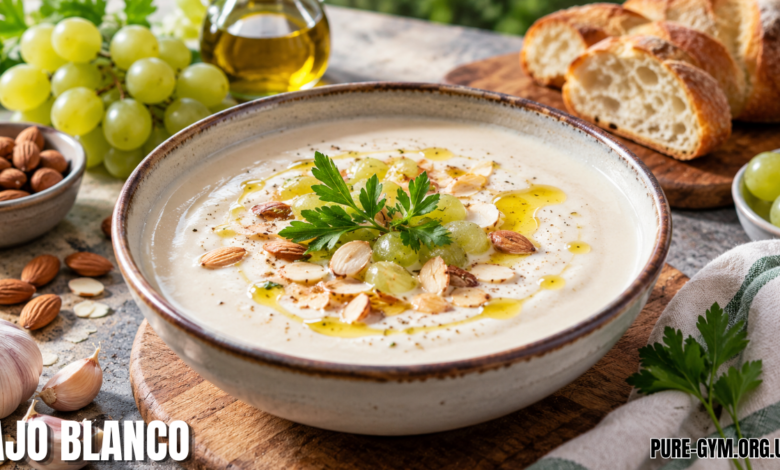
The basic mixture combines almonds with soaked bread, garlic, olive oil, vinegar, water, and salt, then blends everything until smooth. Traditional and modern versions vary in thickness, garlic strength, acidity, and garnish. Spain’s tourism authority also describes ajoblanco as a cold cream of garlic, almonds, and bread commonly served during warmer weather.
That almond base is what gives the soup its pale ivory color and almost creamy texture.
A well-made version shouldn’t taste like almond milk with garlic thrown into it. You want balance: nutty richness first, fresh olive oil running underneath, a little vinegar for lift, then garlic lingering at the end.
Too much garlic ruins it.
Search Smarter
Typing “ajo blanco near me” into Google Maps is the obvious starting point, but don’t stop there.
Restaurants don’t always use the same spelling. Try several searches:
- ajoblanco near me
- ajo blanco near me
- Spanish cold almond soup near me
- Andalusian restaurant near me
- Spanish tapas restaurant near me
- Malaga food near me
Then open the actual menu.
This matters because restaurant search results can surface places simply because a review mentions Spanish food, almonds, garlic, or gazpacho. That doesn’t prove ajoblanco is currently available.
Seasonal menus make things even trickier. Because the soup is served cold, you’re more likely to see it during spring and summer or on warm-weather tasting menus. A restaurant that served it in July may have replaced it by November.
Call first if you’re making a special trip.
Thirty seconds on the phone beats driving 40 minutes for a dish that disappeared from the menu last week.
Check Spanish Restaurants
Your best prospects are serious Spanish restaurants, tapas bars, Andalusian-inspired kitchens, and chef-driven Mediterranean restaurants with Spanish influences.
Look deeper than the restaurant category.
Read the menu descriptions.
A place serving dishes such as jamón ibérico, pan con tomate, boquerones, croquetas, tortilla española, gambas al ajillo, salmorejo, or regional Spanish tasting menus is more likely to know what it’s doing with ajoblanco than a generic “Mediterranean” restaurant serving pizza, hummus, pasta, and burgers on the same menu.
That’s not culinary snobbery. It’s simply a better filter.
Ajoblanco depends on technique and ingredient balance rather than a dozen flashy additions. Restaurants already working seriously with Spanish regional food have a better chance of getting those details right.
What To Expect
The first spoonful should be cool and smooth.
Not icy.
Extreme cold can mute the almond, garlic, and olive oil flavors, so serving temperature matters. The texture can range from fairly pourable to thick and velvety, depending on the recipe.
Then come the garnishes.
Grapes are a classic partner because their sweetness cuts through the garlic and vinegar. Some chefs use melon, sliced almonds, herbs, olive oil, fruit, or seafood. Modern restaurant versions can get much more elaborate.
Creative toppings are fine.
They shouldn’t rescue bad soup.
If the base tastes flat, watery, aggressively sour, or dominated by raw garlic, a beautiful garnish isn’t fixing the problem.
Quality Clues
Start with texture.
You don’t want obvious chunks of bread or gritty almonds. A little natural texture is acceptable, especially with a rustic preparation, but restaurant versions should generally feel cohesive.
Next comes acidity.
Sherry vinegar works particularly well because it brings brightness without turning the soup into something sharply sour. Spain’s official ajoblanco recipe specifically uses sherry vinegar.
Olive oil matters too. Since the ingredient list is short, cheap or tired-tasting oil has nowhere to hide.
Then judge the garlic.
Ajo literally points you toward garlic, but more garlic isn’t automatically better. The strongest bowl at the table isn’t necessarily the best one. The garlic should give the soup character without making every other ingredient disappear.
Simple food exposes mistakes.
That’s part of the appeal.
Price Expectations
There’s no meaningful nationwide “standard price” for ajoblanco in the United States because restaurant style, city, portion size, and presentation vary too much.
Instead of judging the dish by price alone, look at how it’s served.
A small appetizer at a neighborhood tapas bar and an ajoblanco course on a fine-dining tasting menu are completely different purchases. One might arrive in a simple bowl with grapes and olive oil; another could include seafood, specialty almonds, infused oil, or carefully plated fruit.
Pay for execution, not decoration.
A simple $12–$15 bowl made beautifully is more interesting than an expensive version buried beneath six toppings.
Dietary Details
Traditional ajoblanco can be suitable for vegetarians and, depending on the preparation, vegans. Spain’s official tourism site includes ajoblanco among traditional Spanish dishes suitable within a vegan context.
Still, don’t assume.
Restaurant chefs change recipes.
Some versions could contain dairy, seafood garnish, specialty stocks, or other additions. Bread also makes the traditional preparation unsuitable for people avoiding gluten unless the kitchen specifically substitutes it.
And almonds are central to the dish.
Anyone with a tree-nut allergy should treat ajoblanco as a dish to avoid unless a restaurant can provide very specific allergy guidance. Cross-contact is another concern in professional kitchens.
Ask directly.
Ordering Tips
If you’ve never tried ajo blanco before, order a smaller portion or share one as a starter.
Give it a couple of spoonfuls before judging it. The first taste can surprise people who expect tomato-based gazpacho. Almond, raw garlic, vinegar, and olive oil create a much more savory, nutty profile.
Pairing it with other Spanish small plates works well because the soup can provide a cool contrast to fried croquetas, grilled seafood, cured ham, or roasted vegetables.
Personally, I wouldn’t bury it under anything intensely spicy before tasting it on its own. A subtle dish loses that fight immediately.
Taste first.
Then eat however you like.
Finding The Best
The best ajo blanco near me isn’t automatically at the restaurant with the highest overall star rating.
Read reviews for the food you actually want.
Search individual Google or Yelp reviews for terms such as “ajoblanco,” “ajo blanco,” “almond soup,” or “cold soup.” Check recent menu photos too. A review from three years ago tells you the restaurant once made the dish; it doesn’t tell you what’s being served tonight.
Restaurant websites and current social posts can be surprisingly helpful here because chefs often announce seasonal dishes before review sites catch up.
And remember the spelling issue.
Search both ajo blanco and ajoblanco. You’ll find more possibilities.
Ajo Blanco FAQs
Is ajoblanco gazpacho?
They’re related through southern Spanish cold-soup traditions, but they aren’t the same dish. Ajoblanco centers on almonds, garlic, bread, olive oil, vinegar, and water, while the gazpacho most Americans recognize typically uses tomatoes and other vegetables.
Is it served cold?
Yes. Ajoblanco is traditionally served chilled, making it especially suited to warm weather. It should taste refreshingly cool rather than half-frozen.
Does it contain dairy?
Traditional recipes don’t need milk or cream. Almonds, bread, olive oil, and water create the creamy texture. Restaurant recipes can differ, so ask before ordering if dairy avoidance is important.
Is ajoblanco gluten-free?
Traditional versions generally contain bread, so normally no. Some restaurants may make gluten-free adaptations, but don’t assume an almond-based soup is automatically gluten-free.
What goes with it?
Grapes are one of the most recognizable accompanimen