You sign up for a gym expecting to pay for a few machines, some weights and a changing room. Then you see the monthly price and wonder, why are gyms so expensive in the first place?
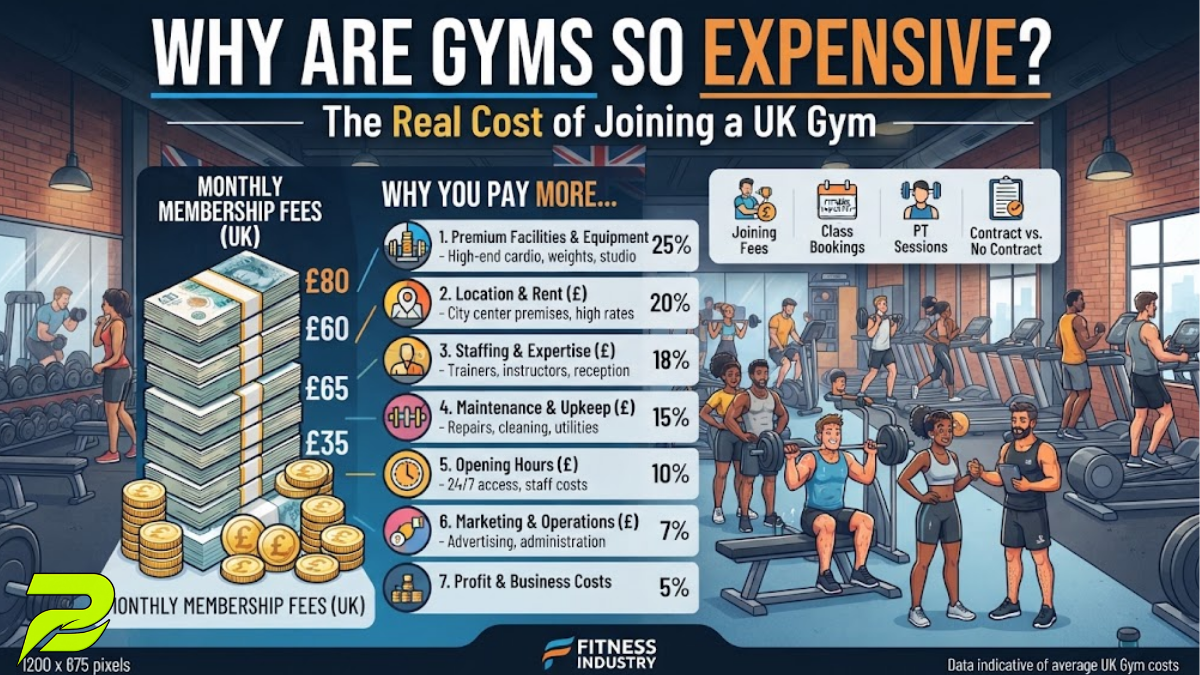
In the UK, the answer is rarely just “because gym owners want to charge more”. A gym is an expensive physical business to operate. Rent, business rates, staff, energy, equipment, cleaning, repairs, insurance, software and ongoing maintenance all have to be paid for whether 20 people turn up on a rainy Tuesday afternoon or the place is packed after work.
I have spent time looking at how different types of gyms position their memberships, and one thing becomes clear quickly: the price difference between a basic 24-hour gym and a premium health club usually reflects what you are actually paying to use.
This guide breaks down why are gyms so expensive, what your membership fee is really funding, why London prices can feel particularly painful, and how to tell whether a gym membership offers decent value.
Key Takeaways
- Gym membership prices cover far more than access to exercise equipment.
- Property costs, electricity, staff and equipment can make running a gym extremely expensive.
- Premium gyms charge more because they often include pools, saunas, classes, larger spaces and additional services.
- Location has a major impact, with central London and affluent areas typically carrying much higher property costs.
- Cheap gyms can keep prices down through simpler facilities, automation, high membership volumes and fewer extras.
- A £20 membership can be excellent value if you use it regularly, while a £90 membership can be poor value if you rarely go.
So, Why Are Gyms So Expensive?
The easiest way to understand why are gyms so expensive is to stop thinking of them as a room full of treadmills.
A modern gym is closer to a leisure business, hospitality venue and fitness service rolled into one. Even a relatively straightforward facility needs premises large enough for cardio equipment, resistance machines, free weights, changing facilities and circulation space.
Then there is the cost of keeping everything running day after day.
The Office for National Statistics includes private health club and gym membership within its consumer price statistics for recreational and sporting services. Its data shows that the index for recreational and sporting services participation rose from 100 in 2015 to 154.6 by July 2026.
That does not mean every gym has increased its prices by exactly the same amount, but it does show that participation-related leisure services have become substantially more expensive over the longer term.
Property Is One of the Biggest Costs
When people ask why are gyms so expensive, property is one of the first things worth considering.
A decent gym requires a surprisingly large footprint. You cannot squeeze 100 pieces of equipment into a tiny shop unit and expect members to move around comfortably.
In Manchester, Birmingham, Leeds or Glasgow, a gym may be able to secure a sizeable premises for less than a comparable operation in central London. In areas such as Canary Wharf, Kensington, Islington or central Manchester, commercial property can become a major part of the financial equation.
The gym also has to cover associated property costs, including business rates, maintenance, cleaning, security and sometimes service charges.
That is why a gym on a busy high street near a major railway station can have a very different pricing structure from a low-cost club on an industrial estate.
Energy Bills Add Up Quickly
Another major factor behind why are gyms so expensive is electricity and heating.
Think about what happens inside a busy health club. Treadmills, cross-trainers, lighting, ventilation, air conditioning, showers, hot water systems, saunas and swimming pools can all consume energy.
A premium club with a large swimming pool has a particularly different energy profile from a basic gym with a few rows of resistance machines.
During colder months, heating showers and changing rooms comfortably is another ongoing expense. In summer, ventilation and air conditioning can become more important.
Members rarely see this cost directly because it is built into the subscription price.
Gym Equipment Isn’t Cheap
It is easy to look at a machine and assume it is simply another item the owner bought once.
In reality, commercial-grade fitness equipment is designed for repeated use by large numbers of people. A treadmill in a commercial gym may receive far more use than one sitting in somebody’s spare room.
A gym must also replace worn cables, benches, flooring, dumbbells, screens and other equipment over time.
Premium clubs tend to invest in more expensive equipment and wider selections. A club may have specialist strength machines, functional training rigs, rowing machines, high-end cardio equipment and dedicated studio equipment.
That investment eventually has to be recovered through membership income.
Staff Costs Matter More Than You Think
The modern gym experience might look heavily automated, but people still keep the business running.
There may be reception staff, personal trainers, cleaners, managers, maintenance workers and group exercise instructors. A large health club can require significantly more staff than a small low-cost gym.
There is also an obvious difference between a site that is largely self-service and one where you can speak to staff throughout the day, attend scheduled classes and receive support.
When considering why are gyms so expensive, this is one of the hidden costs members often overlook.
Cleaning and Hygiene Are Essential
You probably notice when a gym is dirty.
Sweaty equipment, changing rooms, showers and toilets need frequent cleaning, particularly at busy times. Floors need attention, bins need emptying and touchpoints need regular sanitising.
A gym cannot simply open its doors, collect membership fees and leave everything untouched.
Cleaning is an ongoing operating cost, and higher-end clubs often maintain larger changing areas, spa facilities and wet areas that require additional cleaning and maintenance.
Why Premium Gyms Can Cost £70, £90 or More
When people ask why are gyms so expensive, they are often comparing a premium health club with a budget operator as though both businesses sell exactly the same thing.
They don’t.
For example, Nuffield Health says membership prices vary according to the location and facilities available. At its Bloomsbury club, current listed prices include £78 a month for off-peak access and £92 for an anytime 12-month membership, with a £29 joining fee. The club includes gym access, a swimming pool, sauna, steam room and unlimited fitness classes.
That is a completely different proposition from a basic gym membership.
A premium club may be selling the convenience of having your workout, swim, sauna, classes and changing facilities under one roof.
You are paying for the whole environment, not just the dumbbells.
Budget Gyms Use a Different Business Model
The other side of the equation helps explain why are gyms so expensive even more clearly.
Low-cost operators tend to strip the experience back to the essentials and make money through volume.
The Gym Group currently advertises saver membership from £18.77 per month for selected plans when paid upfront, with access to one gym, while another saver option starts from £24.33 a month and can offer access to multiple locations. The company notes that prices vary by gym.
That model works because the operator can spread costs across a large membership base while keeping extras relatively limited.
You may get plenty of equipment and convenient opening hours, but you are less likely to get a swimming pool, spa area, extensive hospitality-style facilities or a large programme of premium classes.
Location Can Make a Huge Difference
This is where UK gym pricing gets particularly interesting.
Imagine two gyms offering broadly similar equipment. One is beside a London Underground station in a prime commercial area. The other is in a retail park outside Sheffield.
The second gym may have cheaper rent, easier parking and fewer property-related costs. The London gym may pay considerably more simply to secure its location.
That difference eventually reaches the customer.
A convenient gym near Liverpool Street or Victoria may cost more than one that requires a 15-minute drive outside town, even when the equipment looks broadly similar.
Transport matters too. Sometimes paying £10 more per month for a gym within walking distance is actually cheaper overall than travelling to a cheaper gym and paying for petrol, parking or extra bus and train journeys.
Membership Numbers Affect the Price
A gym’s membership model is more complicated than it appears.
Not every member attends regularly. Some people sign up in January, visit enthusiastically for three weeks and then disappear. Others train four or five times a week.
This creates an opportunity for gyms to sell memberships based on expected average usage rather than assuming every member will occupy equipment at peak times every day.
However, the model becomes difficult if too many members attend during the same hours.
That is why peak-time congestion can sometimes exist even at gyms that do not look especially expensive.
Are Expensive Gyms Actually Better?
Not necessarily.
One of the biggest mistakes consumers make when considering why are gyms so expensive is assuming a higher price automatically means better results.
It doesn’t.
A £25 gym can be brilliant for someone who mainly wants a squat rack, cable machine and cardio equipment. A £90 club might be excellent for someone who swims several times a week, attends Pilates classes and uses the sauna after training.
The right question is not simply, “Is this gym expensive?”
It is, “Will I actually use what I am paying for?”
How to Decide Whether Your Gym Is Worth the Money
Work out your realistic monthly usage.
Suppose your membership costs £60 a month. If you go 12 times, you are effectively paying £5 per visit. Go four times and the effective cost jumps to £15 per visit.
Then consider convenience.
A gym that takes ten minutes to reach from work may be more valuable than a cheaper club that involves a 40-minute round trip. The same logic applies to classes, swimming, parking and opening hours.
Before joining, check the cancellation terms, joining fee, peak restrictions and any charges that sit outside the advertised monthly price.
Nuffield Health, for instance, offers different structures including longer commitments and rolling monthly memberships, with local prices varying by club.
Why UK Gym Prices Keep Feeling Higher
Another reason people keep asking why are gyms so expensive is that the cost of leisure services has been rising alongside wider household expenses.
The ONS leisure and sporting services data shows a noticeable upward movement in the cost index over recent years, with participation services reaching a 2026 index level of 154.6 against a 2015 base of 100.
When gym prices rise at the same time as rent, food, commuting and household bills, the membership can feel much more expensive even when the increase itself is relatively modest.
That is especially noticeable for people living in London and other high-cost urban areas.
Can You Get a Cheaper Gym Membership?
Absolutely.
Budget chains, council leisure centres, university gyms, workplace schemes and off-peak memberships can all provide cheaper options.
The best saving is often choosing the plan you genuinely need rather than paying for facilities you never use.
If you only train before work and never swim, an off-peak gym without a pool may be more sensible than a premium club.
Some operators also offer student, corporate, group or promotional discounts. Nuffield Health, for example, lists discounts for students, children added to memberships, joint memberships and eligible emergency workers, among other offers.
The Bottom Line: Why Are Gyms So Expensive?
Ultimately, why are gyms so expensive comes down to the cost of operating a large, equipment-heavy physical business.
You are paying a share of the premises, electricity, water, staff, cleaning, equipment, maintenance, insurance, technology and facilities.
The expensive gym may not be charging you simply for exercise. It may be charging for convenience, location, classes, swimming, spa facilities, service and a more comfortable overall experience.
At the same time, you do not have to spend £70 or £90 a month to get fit.
For many people, a basic membership costing around £20 to £30 can provide everything they actually need. For others, the extra features of a premium health club may make the higher fee worthwhile.
The smartest approach is to compare what you will use, not what looks impressive on the brochure.
Frequently Asked Questions
Why are gyms so expensive in the UK?
Gyms are expensive mainly because of property, staff, energy, equipment and maintenance costs. Premium clubs also charge for facilities such as swimming pools, saunas, classes and larger changing areas.
Is £50 a month expensive for a gym?
£50 a month is mid-range rather than exceptionally expensive for the UK. Whether it is good value depends on the facilities, location and how frequently you attend.
Are expensive gyms worth it?
Expensive gyms are worth it when you regularly use the extra facilities and services included in the membership. If you only need weights and cardio equipment, a cheaper gym may offer better value.
Why do London gyms cost more?
London gyms often cost more because commercial property, staffing and operating costs can be higher. Central locations also command premium rents, which can feed through into membership prices.
How can I reduce my gym costs?
Choose a budget operator, off-peak membership or discounted plan and compare the total cost before joining. Check joining fees, contract terms and whether you actually need premium facilities.