

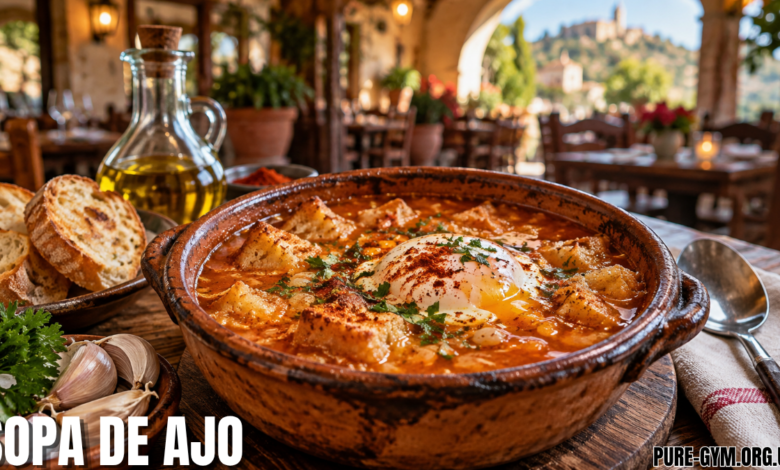
If you’re searching for the best sopa de ajo near me, you’re usually looking for a Spanish-style garlic soup built around garlic, bread, olive oil, paprika, and often egg. It sounds simple, but the dish varies considerably by region and restaurant, so checking the actual menu description matters more than finding something labeled only “garlic soup.”
Sopa de ajo translates simply as garlic soup. In Spain, you’ll also see the name sopa castellana, especially for versions associated with Castile. Spain’s official tourism site describes sopa castellana as garlic soup and notes its strong connection with Castilla y León, where it has traditionally been eaten during colder weather and around Holy Week.
For U.S. diners, the challenge isn’t understanding the name. It’s figuring out which restaurant serves the style you actually want.
What Is Sopa de Ajo?
Traditional Spanish sopa de ajo is a rustic bread-and-garlic soup rather than a creamy purée. Garlic is gently cooked in olive oil, bread is added for body, paprika supplies color and depth, and water or stock forms the broth.
Egg is common too.
Spain’s official recipe for the Madrid version uses chopped garlic, sliced bread, paprika, oil, hot water, salt, and beaten eggs. A separate Castilla-La Mancha version adds chicken stock and can include ham or chorizo, with eggs cooked directly in the soup.
That difference is useful to remember because there isn’t one rigid formula.
José Andrés’ Castilian-style recipe published by Saveur, for example, uses garlic, country bread, smoked paprika, white wine, chicken stock, eggs, olive oil, and parsley.
So a restaurant doesn’t need to reproduce one exact ingredient list to serve a recognizable version of the dish.
What Should Good Sopa de Ajo Taste Like?
Garlic should lead the flavor, but the soup shouldn’t taste like raw garlic blended into water.
A well-made bowl generally has several layers: savory broth, mellow cooked garlic, the warm earthiness of paprika, olive oil, and bread that has softened enough to thicken the liquid. Depending on the recipe, egg may appear as soft strands, a poached egg, or partially set pieces throughout the broth.
The texture matters just as much as the flavor.
Traditional bread isn’t merely a garnish. It absorbs broth and gradually gives the soup a thicker, rustic consistency. If you’re expecting something similar to cream of mushroom soup, French onion soup, or a smooth roasted-garlic bisque, traditional Spanish sopa de ajo can be quite different.
Paprika also changes the character of the bowl. Spanish versions frequently use pimentón, giving the broth a reddish color and a deeper, sometimes smoky flavor.
Sopa de Ajo and Sopa Castellana: Are They the Same?
The names overlap heavily, but recipes aren’t identical everywhere.
Spain’s tourism authority explicitly refers to sopa castellana as garlic soup, and its regional recipes show how ingredients can shift between locations. The Madrid recipe is particularly spare, while another Spanish version includes stock, ham or chorizo, parsley, and individual eggs.
Even within Spain, garlic soup has regional variations. A Basque-style version published by Saveur, for instance, uses dried bread and choricero peppers rather than following the familiar paprika-and-egg formula exactly.
For restaurant searching, this gives you an advantage: try both sopa de ajo and sopa castellana. A Spanish restaurant may use either term on its menu.
How to Find the Best Sopa de Ajo Near You
Because “near me” depends on your location, a nationwide restaurant list can quickly become useless. A better approach is to search specifically for the dish, confirm the current menu, and compare how each restaurant prepares it.
Start with searches such as:
- “sopa de ajo near me”
- “sopa castellana near me”
- “Spanish garlic soup near me”
- “Castilian garlic soup near me”
- “Spanish restaurant sopa de ajo”
- “Spanish tapas restaurant near me”
Then open the restaurant’s actual menu instead of relying only on a search-result snippet or an old customer photo.
Soup selections change. Some restaurants offer seasonal soups, weekend menus, or rotating specials, so calling ahead is sensible when you’re traveling specifically for one dish.
Read the Menu Description Carefully
The words sopa de ajo don’t guarantee that every restaurant is serving the same Spanish preparation.
Current U.S. menus illustrate the difference. Mi Luna Tapas Restaurant & Bar in Houston lists a sopa de ajo con pollo described as roasted garlic soup with chicken and noodles. Flaco’s Mexican Restaurant in Naples, Florida, lists its sopa de ajo as a beef-and-tomato-based soup with garlic, egg, and croutons.
Both can legitimately be called garlic soup, but neither description should be assumed to match a Castilian bread-and-paprika version exactly.
If what you want is traditional Spanish-style sopa castellana, look for a description mentioning several of these ingredients:
| Ingredient or feature | What it contributes |
| Garlic | Main aromatic flavor |
| Rustic or stale bread | Thickens and gives body |
| Olive oil | Richness and carries the garlic flavor |
| Pimentón or paprika | Red color and earthy or smoky notes |
| Egg | Adds richness and protein |
| Chicken stock or water | Forms the broth |
| Jamón or chorizo | Optional savory addition in some versions |
No single ingredient beyond garlic defines every regional recipe, but bread, garlic, olive oil, paprika, and egg are strong clues that you’re looking at the familiar Castilian style.
What to Look for When Choosing a Restaurant
Finding the dish is only half the job. If several nearby restaurants serve it, compare the menus instead of immediately choosing the closest one.
A restaurant specializing in Spanish or Castilian cooking is more likely to offer the version most people associate with Spain. Look at the rest of the menu too. Dishes such as tortilla española, croquetas, gambas al ajillo, jamón, and regional Spanish stews can indicate that the restaurant is working within a broader Spanish menu rather than simply using the Spanish name for an unrelated garlic soup.
Photos can help with texture. Traditional sopa de ajo commonly looks rustic rather than polished: reddish-brown broth, softened bread, visible garlic, and egg.
Don’t judge by appearance alone, though. A family recipe might look quite different while still following a longstanding regional tradition.
Common Mistakes When Ordering Sopa de Ajo
One mistake is searching only for “garlic soup.” That query can return creamy garlic soups, roasted-garlic bisques, Czech garlic soup, Mexican versions, and other dishes that aren’t Castilian sopa de ajo.
Another is assuming every Spanish restaurant keeps it on the menu year-round. Spain’s official recipe pages classify the dish as suitable throughout the year, but individual U.S. restaurants decide their own availability.
It’s also easy to assume that ham or chorizo must be present. They don’t. Spain’s Madrid recipe contains neither, while another regional recipe permits ham or chorizo.
Vegetarians should therefore ask rather than guess. A bowl without visible meat could still use chicken stock, while another restaurant might prepare the soup with water or vegetable broth.
Can You Make It at Home if No Restaurant Serves It?
Yes. Sopa de ajo is particularly practical to cook at home because its foundation uses ordinary pantry ingredients.
A basic Spanish-style approach starts by gently cooking sliced or chopped garlic in olive oil. Bread and paprika are added before water or stock, and the mixture simmers until the bread softens into the broth. Eggs go in toward the end.
Spain’s Madrid recipe cooks the soup for about 15 minutes after adding hot water before incorporating beaten eggs. José Andrés’ version takes a slightly different path, using chicken stock and white wine and cooking the garlic until golden before adding the remaining ingredients.
The biggest practical mistake is scorching the garlic or paprika. Burned garlic becomes bitter quickly, while paprika can develop an unpleasant flavor if left over high heat too long. Have your liquid ready before adding the paprika so the cooking can move along without delay.
Frequently Asked Questions
What is sopa de ajo made from?
Traditional Spanish versions are generally built from garlic, bread, olive oil, paprika, and water or stock, with egg commonly added near the end. Some regional recipes also include ham, chorizo, parsley, or other additions.
Is sopa de ajo the same as sopa castellana?
The terms are often used interchangeably for Spanish Castilian garlic soup, although recipes vary by region and household. Spain’s official tourism material describes sopa castellana as garlic soup and documents several different preparations.
Is sopa de ajo vegetarian?
Not always. Some recipes use only water, while others contain chicken stock, ham, or chorizo. If you’re ordering at a restaurant, ask what broth and meat ingredients are used rather than relying on the dish name.
Is sopa de ajo spicy?
Usually it is more savory and garlicky than hot. Paprika supplies much of the characteristic flavor and color, although regional variations can include peppers that add more heat.
How can I find authentic sopa de ajo near me?
Search for both “sopa de ajo” and “sopa castellana,” then check current menus from Spanish restaurants in your area. If you specifically want the Castilian style, look for garlic, bread, olive oil, paprika, egg, and either water or stock in the description.
